
What are the Symptoms of Bent Propeller?

A bent propeller can sneak up on even the most [...]
A bent propeller can sneak up on even the most careful boat owner, undermining safety and efficiency. Whether you’re dealing with a subtle bent blade or full-on distortion, the signs often appear as reduced speed, vibrations, and other irregularities. Promptly recognizing these symptoms can save you from escalating repair costs and costly replacements. At our prop shop, we frequently see stainless steel prop setups handle damage differently than an aluminum prop, but the indicators of trouble remain remarkably similar across all types. Below, we outline the main ways a bent or damaged prop can affect your boat.
Boat Speed Reduction
One of the first signs of a bent propeller is a noticeable slowdown. A healthy prop should deliver smooth thrust at various speeds. When it’s bent, waterflow becomes disrupted, cutting down on forward momentum. This reduced efficiency might show up as sluggish acceleration or a modest drop in top speed. If your boat suddenly feels underpowered, don’t assume you just need a new prop—inspect for any damage that could be forcing your boat to work harder than normal.
Vibrations
Excessive vibrations often point to a bent or misaligned propeller. Since each prop blade should rotate evenly, any irregular shape disrupts that harmony. Your steering wheel or the hull itself might rattle, especially at certain RPMs. While vibrations can come from other issues—like a worn cutlass bearing or unbalanced shaft—a bent propeller is a prime suspect, particularly if you’ve recently hit submerged debris.
Impact on Engine and Transmission Components
A bent or otherwise damaged propeller places undue stress on the entire drive system. When the prop spins unevenly, the shaft can experience lateral forces it wasn’t designed to handle. Over time, these stresses may degrade engine mounts, seals, and even internal gears. In severe cases, you might notice leaks or unexpected knocks. If left unchecked, the repair costs climb quickly, especially for owners of larger boats.
Uneven Rotation
Uneven rotation is harder to detect without close inspection, but it can manifest in subtle ways—like minor surges in RPM or small shifts in heading. On many boats, this unevenness affects overall handling. You may sense it during tight turns or when transitioning between speeds. If you suspect rotation issues, remove the propeller and test its balance. Even a slight bent can throw off the delicate equilibrium a prop needs for optimal performance.
Strange Noises
A strange noise emanating from the lower unit can indicate a bent propeller. When metal is misshapen, it may scrape against the housing or create odd acoustic vibrations. If your boat has begun producing new clangs or hums, consider a thorough check of your prop. Minor distortions in the trailing edge area might cause these noises to vary with throttle changes.
Visual damage
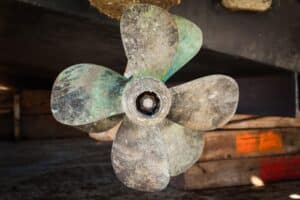
Sometimes, the simplest way to confirm a bent propeller is to look at it. If you notice a clearly bent blade or warped sections, immediate repair or replacement is vital. Aluminum prop designs tend to bend more readily, whereas a stainless steel prop may resist minor impacts but still suffer distortions from a high-force collision. Keeping tabs on your prop’s shape and surface can help you dodge rising repair bills down the road.
Poor Fuel Efficiency
A bent propeller disrupts waterflow, forcing your boat to expend more energy for the same speeds. This inefficiency translates directly into extra fuel use. Monitoring your fuel gauge is one way to spot potential prop damage. If your boat guzzles fuel unexpectedly, your prop might not be spinning as smoothly as it should. Correcting the issue can restore the boat’s performance while boosting your bottom line.
Steering Issues
Another symptom of a bent or damaged prop is erratic steering. When one blade is out of alignment, your boat can pull more strongly to one side, or it may feel unpredictable at higher speeds. Oversteering or drifting is not only frustrating but also potentially hazardous. Addressing a bent propeller helps recalibrate the boat so it’s more responsive and stable when navigating tight waterways.
Conclusion
From speed reduction and vibrations to strange noise and steering difficulties, the warning signs of a bent propeller are varied but distinct. Acting quickly not only spares you time and money but also safeguards your boat from more extensive damage. Whether you own a sleek vessel outfitted with a stainless steel prop or rely on an aluminum prop for versatility, keep an eye on these telltale indicators. Should you detect trouble, consider professional propeller repair. Even advanced resources like a mercury prop selector or yamaha propellers can’t fix a problem if your prop is fundamentally bent. Consult experts who can diagnose issues with your shaft, cutlass bearing, and prop condition, ensuring your boat returns to peak performance in no time.
Keywords for Internal Linking:
propeller repair
mercury prop selector
yamaha propellers
Share This Article

Written by : wytlabs
Follow Us
Latest Articles
May 11, 2026
May 11, 2026
May 11, 2026


